
Meta Description: Compare AV over IP and traditional matrix switchers for your Pro AV project. Learn scalability, cost-efficiency, and use cases to make the right choice in 2026. — 158 chars
The global Pro AV market is projected to reach $38.27 billion by 2031, with AV over IP emerging as a dominant trend reshaping how businesses build audio-visual systems<superscript:4. For European and North American enterprises upgrading their meeting rooms, control centers, or exhibition spaces, the choice between AV over IP and traditional matrix switchers has become a critical decision that impacts scalability, TCO (Total Cost of Ownership), and future-proofing.
At BeingHD, a leading Pro AV manufacturer with over a decade of experience, we’ve supported hundreds of global clients in navigating this transition. Let’s break down the core differences, advantages, and ideal use cases for both solutions to help you align technology with your project goals.
1. Traditional Matrix Switchers: Reliability for Fixed-Size Environments
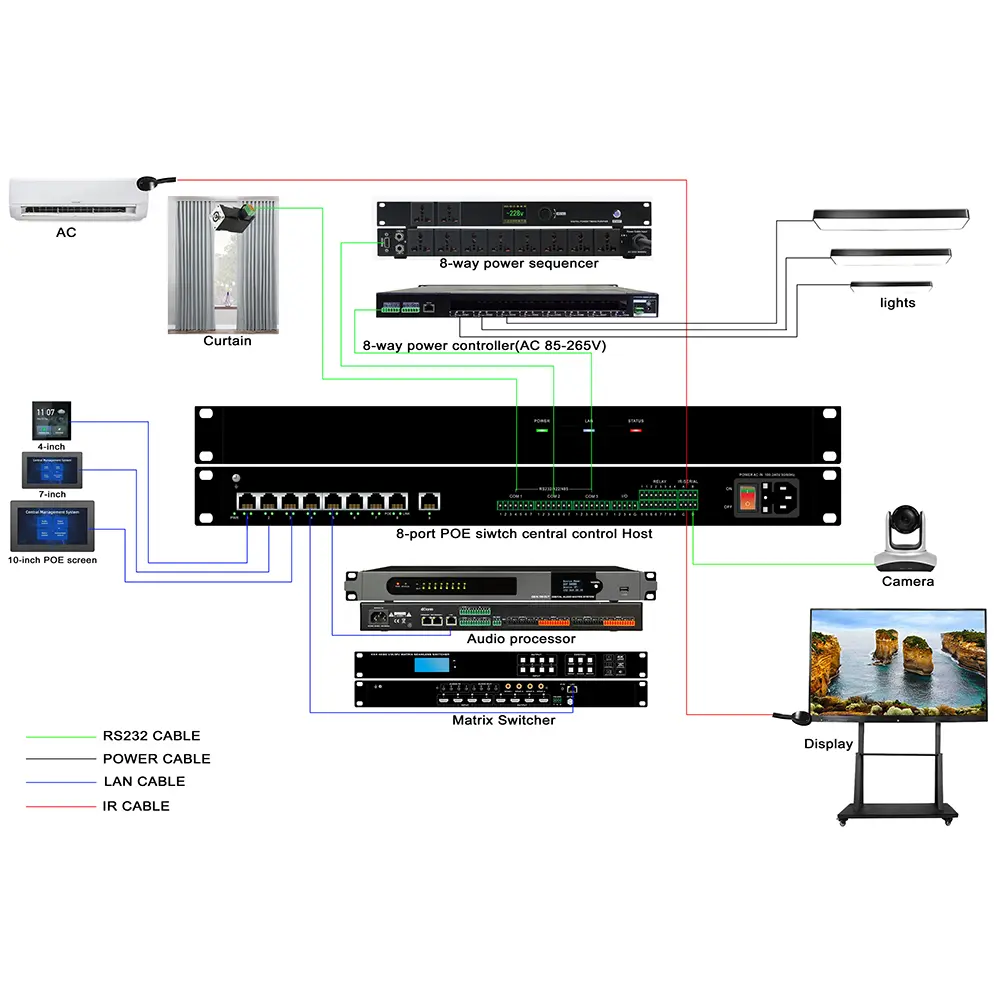
Traditional matrix switchers, such as our HDMIマトリックススイッチャー そして モジュラー・マトリックス・スイッチャー, excel in scenarios where the number of input/output ports is fixed and stability is non-negotiable. These hardware-centric solutions offer near-zero latency switching (critical for live broadcasts or real-time control rooms) and straightforward operation, making them a staple in small to medium-sized spaces like huddle rooms or local security centers.
Our modular matrix switchers take this reliability a step further with hot-swappable I/O boards and power modules, ensuring minimal downtime during maintenance — a feature that has earned us a 99% client satisfaction rate globally <superscript:2.
2. AV over IP: Scalability for Global & Expanding Systems
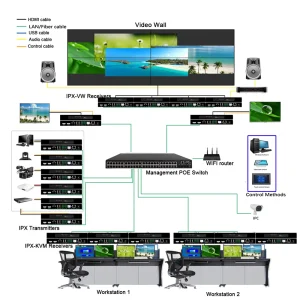
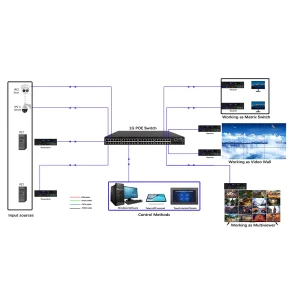
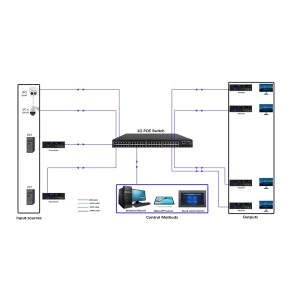
AV over IP (including HDMI over IP and HDMI over Ethernet) transforms AV signals into data packets, enabling transmission over standard IP networks. This architecture addresses the limitations of traditional matrix switchers, which require hardware upgrades to expand ports — a costly and inflexible process for large-scale projects.
Key benefits of our AV over IP Solutions include:
-
Unlimited Scalability: Add new devices or locations without replacing core hardware, ideal for multi-site enterprises or large venues like convention centers.
-
Cost Savings: Leverage existing IP infrastructure to reduce wiring costs by up to 30% compared to traditional coaxial setups <superscript:1.
-
Global Access: Stream 4K content across continents with low latency (as low as 180ms) via SRT Gateway technology, perfect for international teams <superscript:1.
3. How to Choose the Right Solution?
Opt for traditional matrix switchers if you need: Low-latency performance for fixed small/medium spaces (e.g., local meeting rooms, retail displays). Choose AV over IP if you require: Scalability for multi-site operations, remote access, or future expansion (e.g., corporate headquarters, global event venues).
At BeingHD, we don’t force a one-size-fits-all approach. Our in-house R&D team offers tailored solutions, whether you need a compact HDMI matrix or a full AV over IP system — backed by 24/7 tech support and OEM/ODM services.
FAQ
Q: Can AV over IP support 4K resolution? A: Yes. Our AV over IP solutions support 4K UHD (3840×2160) at 60Hz, with hardware acceleration to minimize CPU usage <superscript:1.
Q: Do I need specialized IT skills to manage AV over IP? A: No. We provide intuitive web GUI control and free editable documents to simplify deployment, even for non-IT teams.